How Much to Install an RSJ in the UK? Labour and Total Costs 2026

Typical UK costs to install an RSJ in 2026: labour, temporary works, engineer fees, Building Control and making-good — not just the price of steel.

How Much to Install an RSJ in the UK? Labour and Total Costs 2026

Steel is the line everyone quotes. Installation is where the money actually goes. Props, needles, skip hire, plasterboard, decoration, parking permits: it adds up faster than the kg/m rate on the stockholder’s PDF.

Figures below are 2026 UK planning ranges for a single domestic opening. London and the South East often sit at the top end. Complex roofs, party wall awards and restricted access blow past these bands. Cross-check steel £/m in sizes and prices UK 2026 and model scenarios in the cost calculator.

Typical cost stack (one opening)

ItemPlanning range (UK)
Structural engineer calculations / drawings£400–£1,200+
Building Control fees£200–£600+ (authority dependent)
Steel supply (cut length)£200–£800+
Delivery / lifting£100–£500+
Padstones and bedding£80–£250
Labour and temporary works£800–£2,500+
Fire protection / encasement£150–£600
Making-good (plaster, flooring, decoration)£500–£3,000+

All-in single knock-through: often £2,500–£7,000+. Big open-plan or multi-beam jobs climb from there.

Party wall surveyors, asbestos sampling and scaffolding can appear as extras. Ask what is included before you compare quotes on headline labour alone.

Three worked budget shapes

A) Short 3 m hallway opening, easy access

Structure-focused total often £2,000–£4,500. Steel is a small slice. Engineer and making-good still matter. See 3 m span guide.

B) Standard 4 m kitchen knock-through

Common band £3,000–£6,000+ before new kitchen units. Temporary works and plaster repairs dominate surprises. Walkthrough: kitchen case study and 4 m span guide.

C) 5–6 m open-plan with crane

Often £5,000–£12,000+ structure-focused, sometimes higher in tight streets. Cranage and making-good long ceilings drive the number. See 5 m and 6 m guides.

What drives labour up

  • Restricted access / no parking
  • Need for a crane on a narrow street
  • Party wall notices and surveyor fees
  • Asbestos checks in older linings
  • Living in the house during works (dust, phasing)
  • Night or weekend working to suit neighbours
  • Unexpected foundation or bearing weakness found in trial holes
  • Multiple steels in one visit (lofts, extensions)

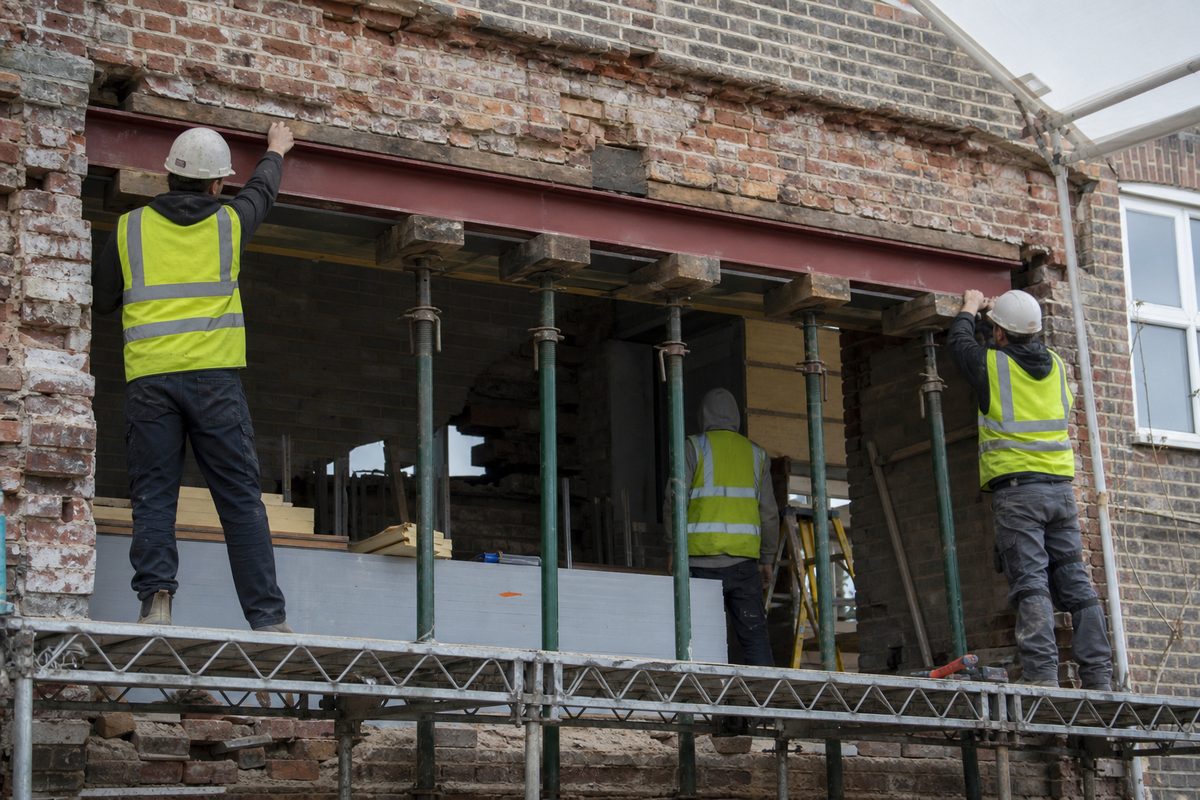
A “cheap” installer who skips temporary works is not a bargain. Ask how they will prop the structure before the wall comes out. Sequencing notes: how to support an RSJ during installation.

Labour vs “day rate” myths

Some quotes hide behind a low day rate and an optimistic number of days. Ask for:

  • included temporary works design/responsibility
  • who supplies props and needles
  • how many people on steel day
  • what happens if the beam arrives wrong
  • making-good scope (patch vs full rooms)

Fixed packages for “standard openings” can be fine when the opening really is standard. Long spans and roof loads are not standard.

Engineer and Building Control costs

Engineer fees vary with complexity and whether site visits are included. Simple single beam calculations sit toward the lower band. Multi-member loft schemes sit higher. More detail: structural engineer costs for RSJ calculations and do you need a structural engineer.

Building Control fees depend on the local authority or approved inspector route. Inspections are not optional decoration. Process overview: Building Control approval process.

Timeline vs cashflow

Engineer and Building Control can take weeks before steel day. Deposits for steel and scaffolding arrive before the dramatic “beam goes in” photos. Build contingency of 10–15% for making-good surprises.

Typical compressed sequence:

  1. Survey and engineer appointment
  2. Calculations and drawings
  3. Building Control application / notices
  4. Steel fabrication and delivery booking
  5. Temporary works and install
  6. Fire protection and inspections
  7. Making-good and decoration

Anyone selling “beam Saturday, dinner party Sunday” is selling a story. Programme notes: how long RSJ installation takes.

DIY labour?

Most homeowners should not install load-bearing steels themselves. You can project-manage, clear rooms and organise skip hire. Cutting a load-bearing wall without temporary works and approvals is how people end up with emergency propping invoices.

If you insist on comparing self-managed vs main-contractor routes, still keep design and Building Control in professional hands.

Regional notes

London, parts of the South East and constrained city centres often price higher for labour, parking and cranage. Rural sites can trade cheaper labour for higher delivery costs. Always get local quotes on the same drawing.

Scotland, Wales and Northern Ireland have their own fee landscapes for building control processes. Use local advice for exact fees; the cost stack categories still apply.

What a good quote includes

  • Reference to engineer drawing revision
  • Steel mark, length, grade, finish
  • Padstones
  • Temporary works method
  • Fire protection responsibility
  • Waste removal
  • Making-good boundaries
  • Exclusions list (kitchen fit-out, flooring, decoration levels)

If a quote only lists steel tonnage, ask for the rest. Compare like with like.

FAQ

Why is labour more than the beam?

Because temporary works, risk, time and skilled people cost more than a few hundred kilograms of steel. The beam is a component. The install is the service.

Should VAT be on top of these bands?

Often yes depending on supplier and contractor status. Ask explicitly. Planning bands on this page are broad and may be discussed ex-VAT in trade conversations.

Can I stage payment?

Common patterns: deposit for steel, stage payment on install, retention-like final payment after making-good. Put it in writing.

Do multi-beam lofts cost “per beam” times N?

Not exactly. There is efficiency in one visit, but access and temporary works complexity rise. See the loft case study.

How to compare contractor quotes

Ask each quote to split: temporary works, steel supply, labour to install, fire protection, making-good allowance, exclusions. A single lump sum hides missing props.

Confirm who applies to Building Control and who books inspections. Confirm padstones are included � padstone guide. Confirm cut length matches drawings � bearing length calculator.

FAQ � labour & totals

Why is labour more than the steel? Because risk, time, access and making-good live there.

Can I supply steel myself? Sometimes. You own delivery mistakes and delays if you do.

Typical contingency? 10�15% on domestic structural packages is prudent.

Bottom line

Price the project, not the beam. If a quote only lists steel tonnage, ask for temporary works, making-good and who is responsible for Building Control conditions.

Anna Kowalska

About Anna Kowalska

Research Writer

Researches steel prices, supplier practices and project costs for UK and Poland readers. Compiles publicly available standards into plain-English explainers.

RSJ.info is an independent editorial site. Our guides and calculators are for planning only and do not replace advice from a chartered structural engineer or Building Control approval. Meet the team →